




How does a lift window achieve its "free-suspension" function, ensuring stable stopping at any height?
Release Time : 2025-12-29
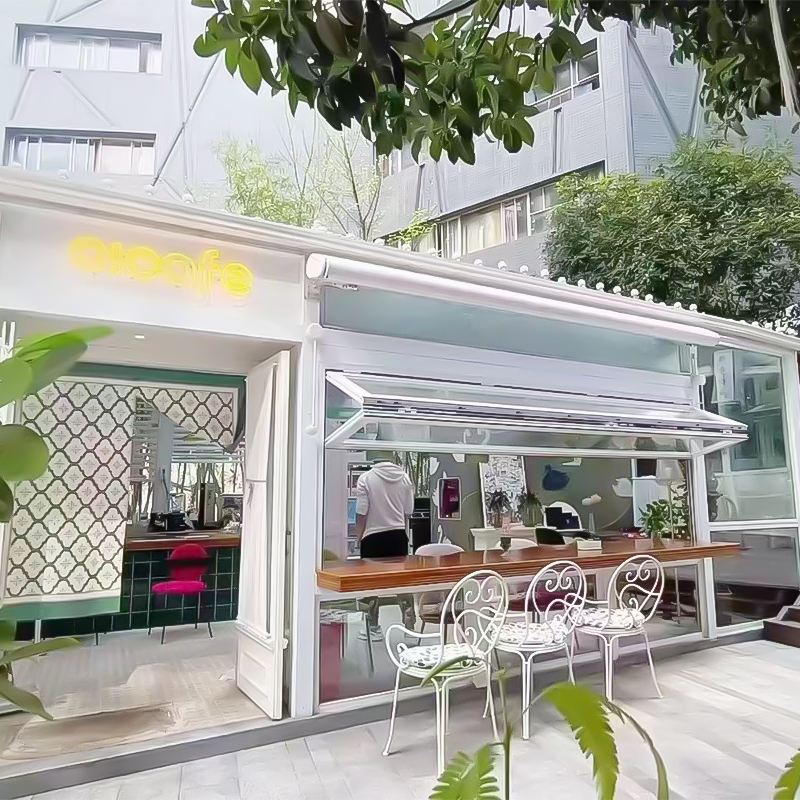
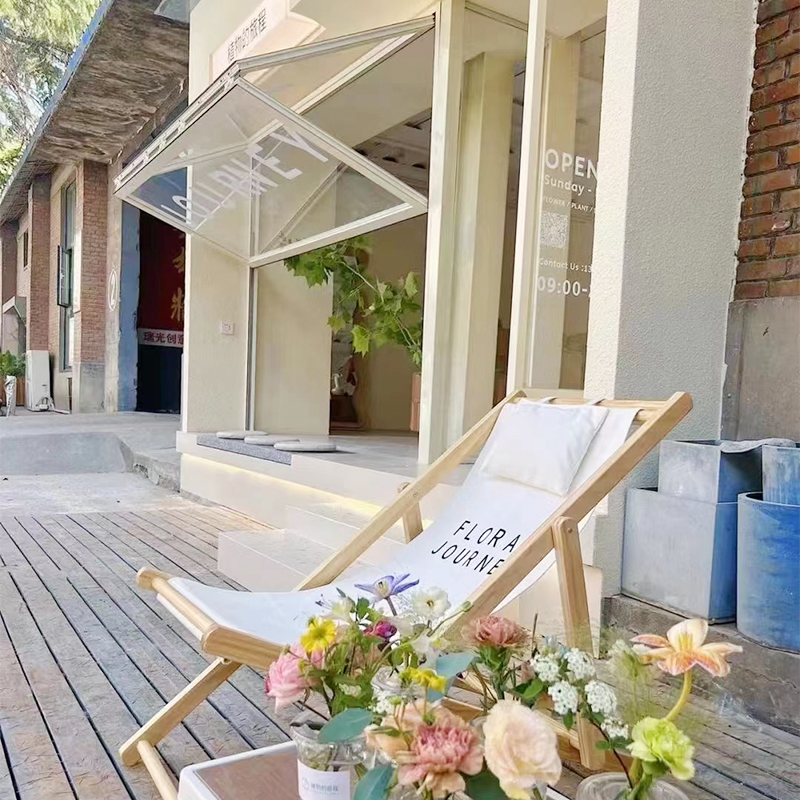
In modern architectural and commercial space design, functionality and space efficiency are increasingly becoming core considerations. As an innovative vertical lifting window system, the lift window, with its advantages of "free-suspension, no bottom space occupation, and easy operation," is widely used in canteen food delivery windows, delicatessen pick-up points, bathroom ventilation windows, kitchen food delivery openings, and even high-end villa doors and windows. Its core appeal lies in the fact that users can simply push or pull the window sash to stop smoothly at any height without the need for latches, locks, or additional supports.
1. Balanced Weight System: The Physical Basis for "Zero-Force Operation"
The lift window's ability to freely hover relies primarily on its built-in balanced weight mechanism. The window sash is connected to the lifting bracket via guide rails on both sides, and the other end of the bracket is connected to a high-density counterweight block, forming a closed loop through steel wire ropes or synchronous belts around the top pulley. When the weight of the window sash is precisely matched with the mass of the counterweight, the system reaches a state of mechanical equilibrium—at this point, the user only needs to apply minimal force to easily raise or lower the window sash. More importantly, the system employs friction damping or hydraulic buffer devices to introduce moderate resistance on top of this balance. This resistance does not hinder manual operation and effectively prevents the window sash from sliding due to inertia or airflow disturbances, thus achieving "silent locking" at any position and truly providing a "push it wherever it wants, stop it wherever it wants" user experience.
2. Precision Guide Rails and Guiding Structure: Ensuring Smooth Operation and Long-Term Reliability
To ensure the window sash does not sway or tilt during raising and lowering, the lift window uses double-sided high-precision aluminum alloy or stainless steel guide rails, combined with low-friction engineering plastic sliders or ball bearings. The guide rail surface is anodized or electrophoretically treated, possessing excellent wear resistance and corrosion resistance, especially suitable for humid and oily environments such as kitchens and bathrooms. Simultaneously, a multi-point guiding and limiting structure is installed between the window frame and the window sash to prevent the window from twisting or derailing under wind pressure or frequent operation. This flexible yet robust guide system not only improves operational smoothness but also extends the overall lifespan of the window, maintaining its stability even after dozens of openings and closings daily.
3. Bottom-less Track Design: Freeing Up Floor Space, Enhancing Hygiene and Aesthetics
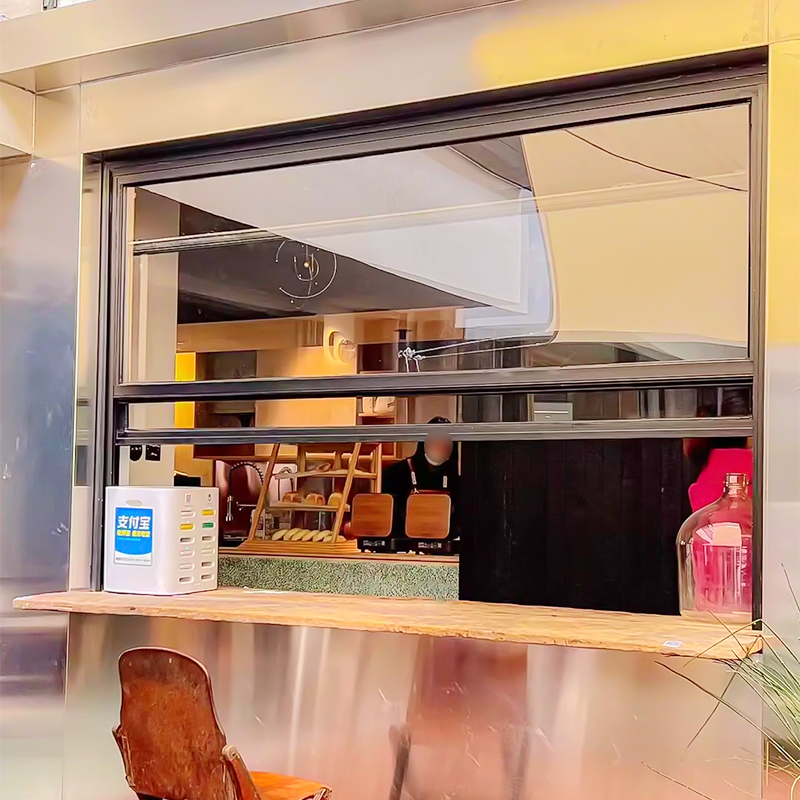
Traditional sliding windows require floor tracks, which easily accumulate dust, cause tripping hazards, and hinder cleaning. Lift windows, however, utilize a top-suspended structure, with the window sash entirely supported by the upper mechanism, leaving the bottom completely suspended and occupying no floor space. This design is particularly practical in cafeteria food service windows—staff can directly pass trays from the counter without having to walk around or lift them; in delicatessens, it makes it more convenient for customers to pick up their food, and ensures thorough floor cleaning; in villa applications, it creates a transparent, minimalist, and modern aesthetic.
4. Application Scenarios Adaptable: From Commercial Efficiency to Residential Elegance
Thanks to its modular design, lift windows can be customized in size, material, and opening height for different scenarios. In the commercial sector, lift windows often utilize tempered glass and 304 stainless steel frames, emphasizing durability and ease of disinfection. For villa windows, thermally broken aluminum profiles, Low-E glass, and silent damping systems are preferred, balancing insulation, soundproofing, and a high-end feel. Regardless of the application, the "free-stop" function remains consistent, meeting users' dual needs for flexibility and security.
The "free-stop" function of lift windows is not magic, but the result of a precise balancing system, low-resistance guiding mechanism, and human-centered design working together. It resolves the conflict between space utilization, hygiene and safety, and ease of use with the simplest operation. In today's pursuit of efficiency, cleanliness, and aesthetic unity, lift windows, with their practical and elegant design, are quietly changing how we interact with architectural openings—a gentle push, free-stopping, making each window a point of convergence for function and intelligence.
1. Balanced Weight System: The Physical Basis for "Zero-Force Operation"
The lift window's ability to freely hover relies primarily on its built-in balanced weight mechanism. The window sash is connected to the lifting bracket via guide rails on both sides, and the other end of the bracket is connected to a high-density counterweight block, forming a closed loop through steel wire ropes or synchronous belts around the top pulley. When the weight of the window sash is precisely matched with the mass of the counterweight, the system reaches a state of mechanical equilibrium—at this point, the user only needs to apply minimal force to easily raise or lower the window sash. More importantly, the system employs friction damping or hydraulic buffer devices to introduce moderate resistance on top of this balance. This resistance does not hinder manual operation and effectively prevents the window sash from sliding due to inertia or airflow disturbances, thus achieving "silent locking" at any position and truly providing a "push it wherever it wants, stop it wherever it wants" user experience.
2. Precision Guide Rails and Guiding Structure: Ensuring Smooth Operation and Long-Term Reliability
To ensure the window sash does not sway or tilt during raising and lowering, the lift window uses double-sided high-precision aluminum alloy or stainless steel guide rails, combined with low-friction engineering plastic sliders or ball bearings. The guide rail surface is anodized or electrophoretically treated, possessing excellent wear resistance and corrosion resistance, especially suitable for humid and oily environments such as kitchens and bathrooms. Simultaneously, a multi-point guiding and limiting structure is installed between the window frame and the window sash to prevent the window from twisting or derailing under wind pressure or frequent operation. This flexible yet robust guide system not only improves operational smoothness but also extends the overall lifespan of the window, maintaining its stability even after dozens of openings and closings daily.
3. Bottom-less Track Design: Freeing Up Floor Space, Enhancing Hygiene and Aesthetics
Traditional sliding windows require floor tracks, which easily accumulate dust, cause tripping hazards, and hinder cleaning. Lift windows, however, utilize a top-suspended structure, with the window sash entirely supported by the upper mechanism, leaving the bottom completely suspended and occupying no floor space. This design is particularly practical in cafeteria food service windows—staff can directly pass trays from the counter without having to walk around or lift them; in delicatessens, it makes it more convenient for customers to pick up their food, and ensures thorough floor cleaning; in villa applications, it creates a transparent, minimalist, and modern aesthetic.
4. Application Scenarios Adaptable: From Commercial Efficiency to Residential Elegance
Thanks to its modular design, lift windows can be customized in size, material, and opening height for different scenarios. In the commercial sector, lift windows often utilize tempered glass and 304 stainless steel frames, emphasizing durability and ease of disinfection. For villa windows, thermally broken aluminum profiles, Low-E glass, and silent damping systems are preferred, balancing insulation, soundproofing, and a high-end feel. Regardless of the application, the "free-stop" function remains consistent, meeting users' dual needs for flexibility and security.
The "free-stop" function of lift windows is not magic, but the result of a precise balancing system, low-resistance guiding mechanism, and human-centered design working together. It resolves the conflict between space utilization, hygiene and safety, and ease of use with the simplest operation. In today's pursuit of efficiency, cleanliness, and aesthetic unity, lift windows, with their practical and elegant design, are quietly changing how we interact with architectural openings—a gentle push, free-stopping, making each window a point of convergence for function and intelligence.